Russell Scholar Program
Oakland Faculty Mentors

Elizabeth Bachen
Professor of Psychology
Esther Lee Mirmow Professorship in Psychology
College of Social Sciences and Humanities
🔗 Faculty site
Research Area: Clinical and Health Psychology/Psychosocial Factors and Health
The project is a study of health and well-being in young adults, including how stress and protective factors shape biomarker and health outcomes. In the course of participating in this research, students will attain a greater understanding of the research process, including generating and testing research questions, building on previous research, the IRB process and importance of confidentiality and steps taken to protect confidentiality in human subjects research, safety in the lab, and teamwork. Students will be able to assist in an ongoing project and develop skills in data scoring, analysis, and the collection of biomarker data. They will have opportunities to share their insights into ongoing and new research questions from the study.

Rasika Bhalerao
Associate Teaching Professor
Khoury College of Computer Sciences
🔗 Faculty site
Research Area: What are the New Fundamentals of Computer Science?
We will plan the second iteration of a Coding for our Community high school summer program here on the Oakland campus. Students in the East Bay Area are a unique group whom we are particularly interested in involving in the technology industry. And, to make our study more complex, the building blocks of computer science have changed, as the technology advanced faster than our education can. The Coding for our Community summer program aims to work with community-minded students to build projects that address issues in their communities, and I am looking for Oakland-based undergraduate students to help me plan the second interation.

Jennifer Cassano
Associate Teaching Professor
Olga T. Scheffler Chair in the Sciences
Mills College at Northeastern University
🔗 Faculty site
Research Area: Gamification of Learning, Pedagogical Research
The research project is centered around gamification in enhancing science learning. By developing and implementing a science-based game, we will explore how game-based learning can motivate students, increase engagement, and improve learning outcomes.
Questions driving the project:
How can gamification be effectively integrated into science education to enhance student learning and motivation?
What specific game mechanics and design elements can be used to promote the understanding of key scientific concepts?
How does game-based learning impact student attitudes towards science and their overall learning experience?
The project will involve:
Identifying core concepts: Identify key scientific concepts that will be the focus of the game.
Game Design and Development: Design and develop a game that aligns with identified learning objectives, incorporating engaging gameplay mechanics, challenges, and rewards. Consider game genres such as card games, board games, video games, puzzle games, escape rooms, etc. Consider how gameplay mechanics, game art work, etc. can potentially impact players’ experiences.
Game Testing: Conduct game testing to gather feedback on gameplay, mechanics, and learning outcomes.
Analysis: Analyze data (such as pre and/or post-game survey feedback) to assess the impact of the game on student learning, motivation, and engagement.

Mi-Kyung “Miki” Hong
Assistant Adjunct Professor
Bouvé College of Health Sciences
🔗 Faculty site

Mark Henderson
Professor of Public Policy
College of Social Sciences and Humanities
🔗 Faculty site

Tasnim Ahmed
Master’s Student
Urban Informatics at Northeastern University
Research Area: Mapping Environmental Justice Burden in Hayward, San Leandro & Central Alameda County
A hands-on GIS (Geographic Information System) research project for two first-year Russell Scholars — no prior coding or mapping experience required. GIS is a tool for visualizing data on a map, similar to how a weather map colors regions by temperature; scholars will use it to see where environmental and health burdens are concentrated across neighborhoods. Using ArcGIS, scholars will build a burden map and in-depth tract profiles for 16 high-burden census tracts in the Hayward/San Leandro/central Alameda County area. They’ll draw on two required public data sources: CalEnviroScreen (a California state tool scoring tracts on combined pollution burden and population vulnerability) and the American Community Survey (ACS) (U.S. Census Bureau data on income, race/ethnicity, and renter status for the same tracts). If time allows in spring, scholars will add a stretch layer using the Urban Displacement Project (UDP) (a research initiative classifying neighborhoods by displacement risk), to explore where environmental improvements could unintentionally accelerate displacement if not paired with housing protections.
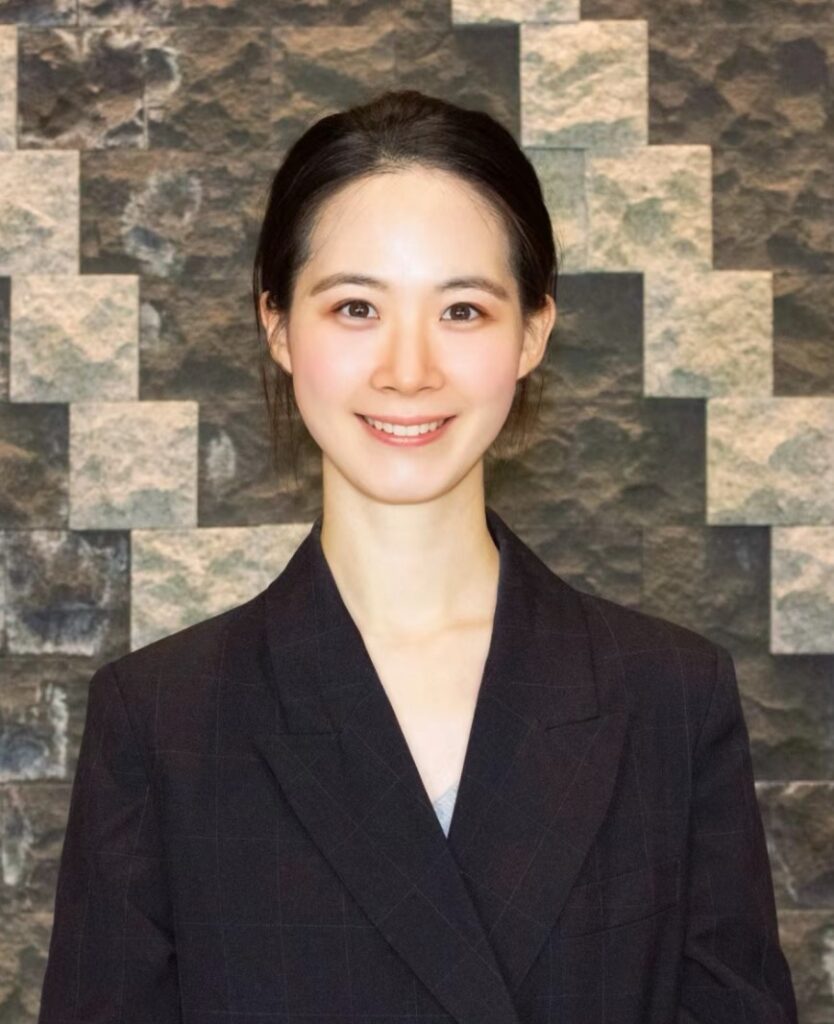
Xiangyun Tang
Assistant Teaching Professor, Psychology
College of Science
🔗 Faculty site
Research Area: Social Psychology, Cyber Psychology, Developmental Psychology
Students are welcome to participate in any of the following projects:
Project 1: Skin Tone Emojis and Profile Pictures in Digital Communication
This experimental study examines how skin tone emojis (Yellow vs. Lighter vs. Darker) and profile pictures (White vs. Black vs. Neutral/Landscape) together shape social perceptions—specifically warmth, competence, and perceived relationship quality—in short, WhatsApp-style message exchanges. A central focus is on congruence versus incongruence: whether mismatched emoji–profile combinations (e.g., a darker emoji with a White profile picture) predict different social inferences compared to congruent pairings. Students will assist in setting up experimental materials, building the Qualtrics survey, and conducting data analysis.
Project 2: Social Media and Identity Construction Among Emerging Adults
This project explores how emerging adults from diverse socio-demographic backgrounds in the U.S. use social media as a tool for identity construction. Students will help transcribe interviews, conduct thematic coding and quantitative content analysis, and interpret how online self-presentation relates to developmental and cultural factors that shape identity expression.
Project 3: Ethnic-Racial Identity Development and Mental Health
Grounded in developmental contextualism and the lifespan model of ethnic-racial identity (ERI), this project extends our prior work on developing the Ethnic-Racial Identity Developmental Dynamics Scale (ERIDDS). The next step is to use the ERIDDS to examine how experiences of discrimination are associated with mental health outcomes.

Robert Pluta
Associate Teaching Professor, Mathematics
College of Science
🔗 Faculty site
Research Area: AI and Mathematics